


Dogs, Diet and Health
Karen Enkelaar (2026)
Director and Consultant, Agspand Pty Ltd, Australia
AOC Certificate Animal Feed and Nutrition
Key Terms: dogs, digestion, carbohydrates, vegetal fibre, prebiotics, feed-grade charcoal
Dog discomfort and diet
We are concerned to see many dogs struggling with digestion and related condition. Carers are distressed to see their animals distressed, perhaps spending fortunes on expensive “fixes” that might not work. Here I offer some kind suggestions for an “inside–out” approach to health using diet that Might Help with ongoing issues for dogs and animals.
Traditionally a “balanced diet” is understood to include a diversity of foods that provide sufficient vitamins, minerals, fats, carbohydrates and proteins to match the nutritional needs for growth and energy.
In this essay I delve deeper into the diversity of carbohydrates (sugar, starch and fibre types) because of their potential effects on digestion and nutrition.
It is worthwhile minimising dogs’ dietary sensitivities that cause digestive intolerances, overheating and bloat, etc., as early as possible. This may be achieved with a diverse diet that not only balances nutrition but also balances gut pH, that is, normalising acid–alkaline levels.
Working towards a diverse diet that normalises gut pH may take time, sometimes months. This is because it is not simply about the food-type eaten (proteins or carbs), but more about building up balanced populations of the living biome (e.g. living bacterial and fungal flora and enzymes) that first “eat” or break down the respective food types for us, contributing to nutrition.
Like others, the biomes that process high-starch and sugar carbohydrates produce their own specific types of acids naturally as part of their digestion. They build up and they like “living” in their own acidy environment. However, having too much of them in our diets may create their excess acidity that affects nutrition uptake (consider how soil-pH imbalances similarly may affect plant nutrition uptake). Their biome dominance may also limit the number of other biome populations that process other food types essential for nutrition, too. What I mean by “imbalance” is, having too much of one thing (monocultures) and too little of others, rather than a diverse balance of multiple entities in smaller amounts.
Excess gut acidity (low pH) produced from digesting excess starch, may negatively reduce the populations of other beneficial flora and enzymes (biome) particularly related to dietary fibre because we have learned that these do not thrive in overly acidic states. However, sufficient populations of these pH-sensitive Fibre-Flora contribute to the production of healthy, strong skin, coat and nails, which are essential “immune fortresses” that protect us from the environment (rain, sun), pathogen “invasion” or overload, and illness.
Firstly, we need vegetal roughage in our diets for this essential fibre-biome to exist per se; secondly, we need the balanced gut environment for them to do their job of adding essential nutrition for immunity; and thirdly, they need time in the right environment to build up their populations as this doesn’t occur instantly.
The state of the gut’s biome may also impact the intensity or lack of response to allergens.
A dog’s stress from anxiety, change or illness can also affect its gut biome, creating a perpetual cycle that needs changing (the stress causes illness, the illness causes stress, and so on). Maintaining a balanced biome diversity may help to buffer the impact of stress (anxiety) and change; that is, impacting one or two smaller populations may not cause the catastrophe of losing a large population in the gut all at once, which may leave the animal with little ability to process food sufficiently and again, cause intense stress for them.
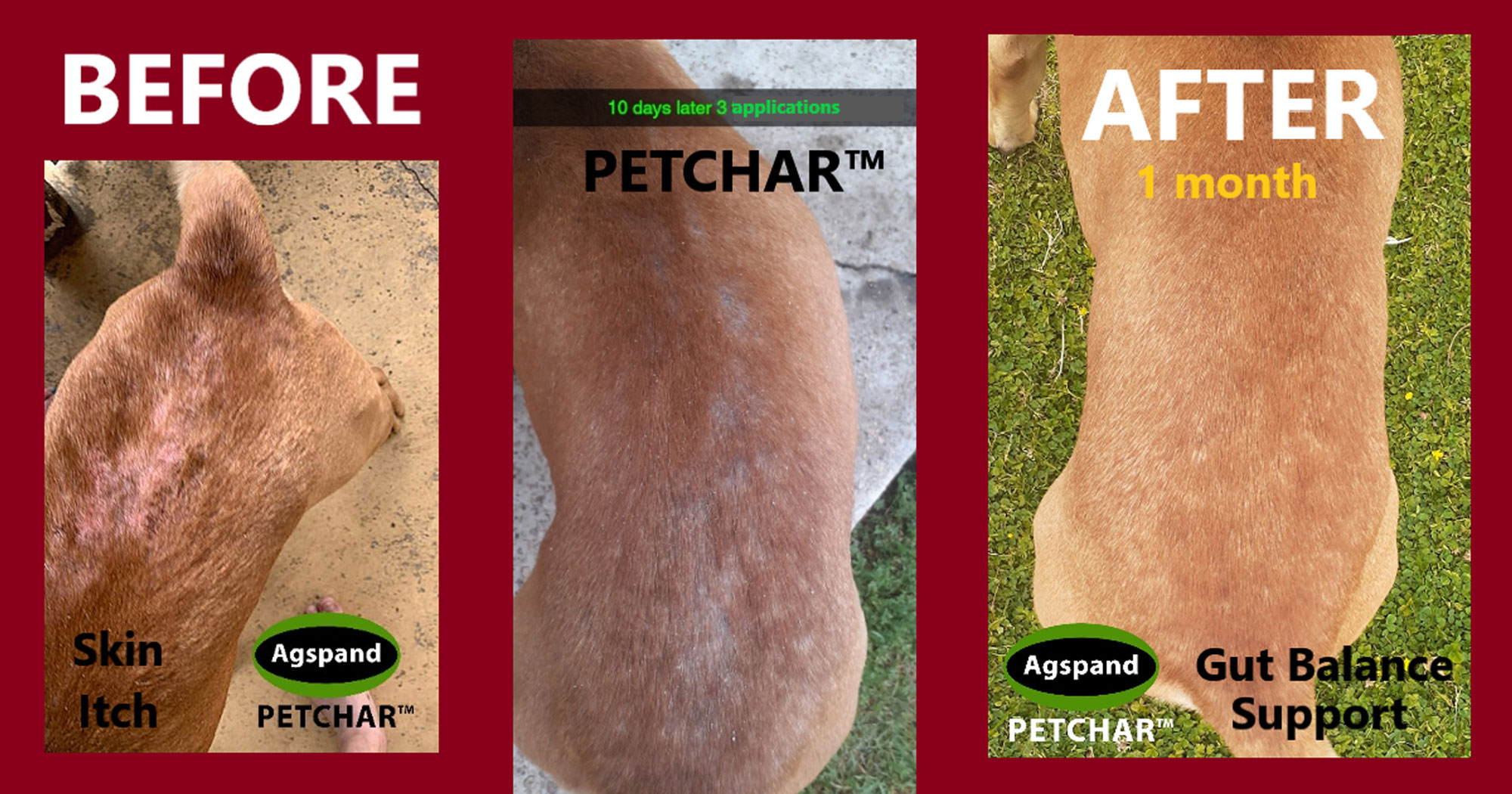
This dog’s skin and coat condition arose from stress when he moved house (change, anxiety), combined with losing a close companion. His recovery included small daily amounts of a prebiotic meal topper.
Different carbohydrates and different fibres
When discussing carbohydrates, usually sugars and high-starch carbohydrates such as grains, corn, rice, pasta and breads are referenced as the primary sources of energy for the body. Wholegrains and legumes are included as the main sources of “wholefood” plant-fibre carbohydrates.
However, little is mentioned of the high-fibre cellulose of non-grain carbohydrates sourced from vegetables and fruits, maybe because these are primarily valued as sources of vitamins and minerals rather than for their vegetal fibre. Let’s look at vegetal fibre in more detail.
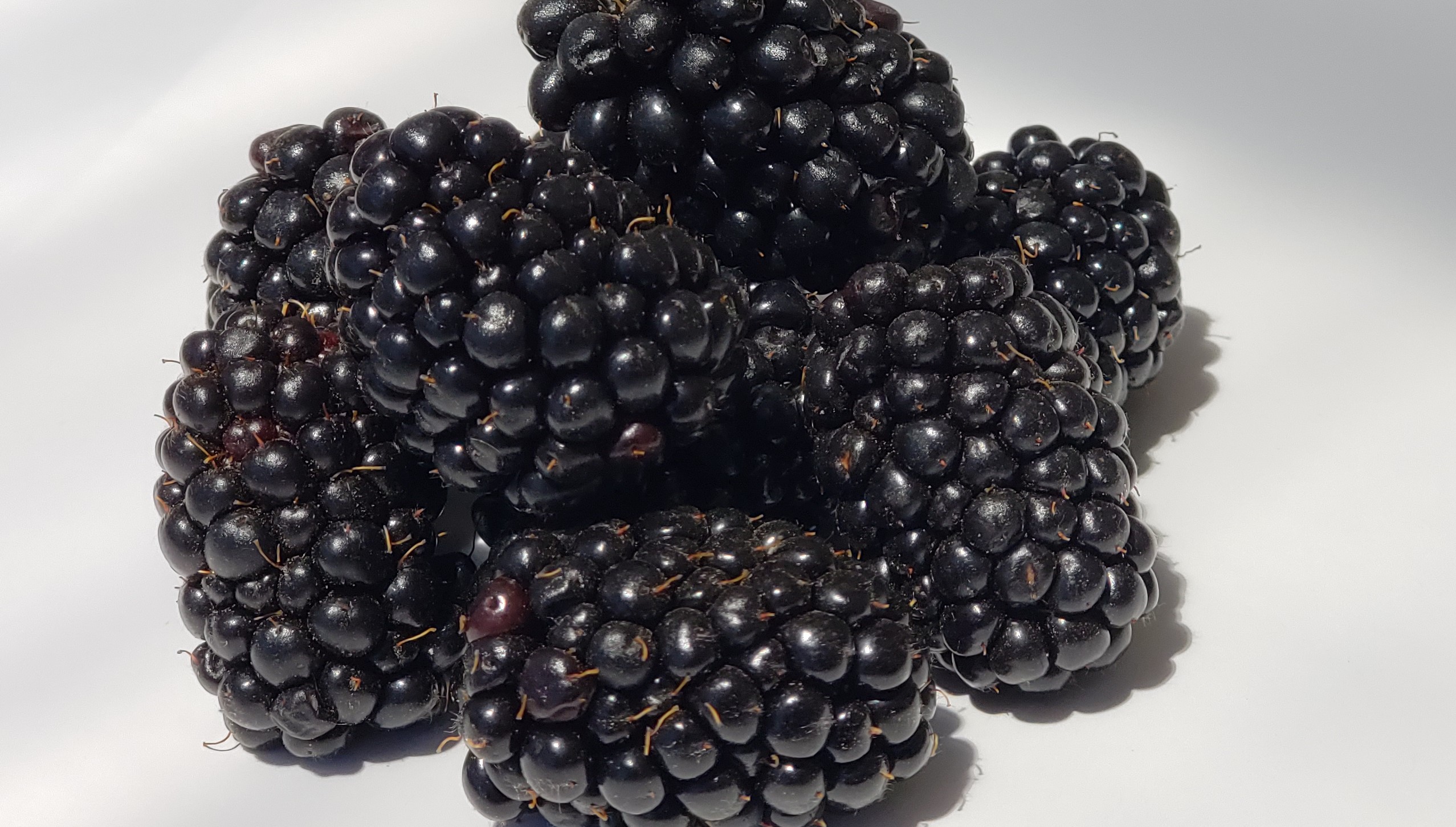
Like many fruits and vegetables, blackberries and strawberries contain vitamins and minerals but also important prebiotic fibre, in their case, pips and seeds.
While too much high-starch (intense acid-building) foods may negatively affect both gut and body condition, we see that dogs, cats and all of us, benefit from “vegetal fibre” (rather than “grain-starch fibre”) in diets. This could be because the “wholefood roughage” of fruit and vegies helps to normalise gut pH by building up populations of the sensitive beneficial biome related to fibre that need mostly a neutral pH to survive, noted above.
Vegetal fibre contains less starch than other carbs, but it can also add folate and build biotin levels (etc.), important B-group vitamins also needed to produce healthy cells, skin, coat and nails. It is interesting that these vitamins and fibre are in fresh green grass, which is why I suspect dogs and cats often like to eat a little fresh grass, even when they have suitable diets.
Keeping in the skins and stalks of fruit and vegies will retain some of their best fibre-roughage, and these also have their own wonderful vitamins and minerals, too.
CHECK: First check to make sure the skins and seeds, etc., are safe to eat; Do Not include them in diets if they aren’t safe for animals.
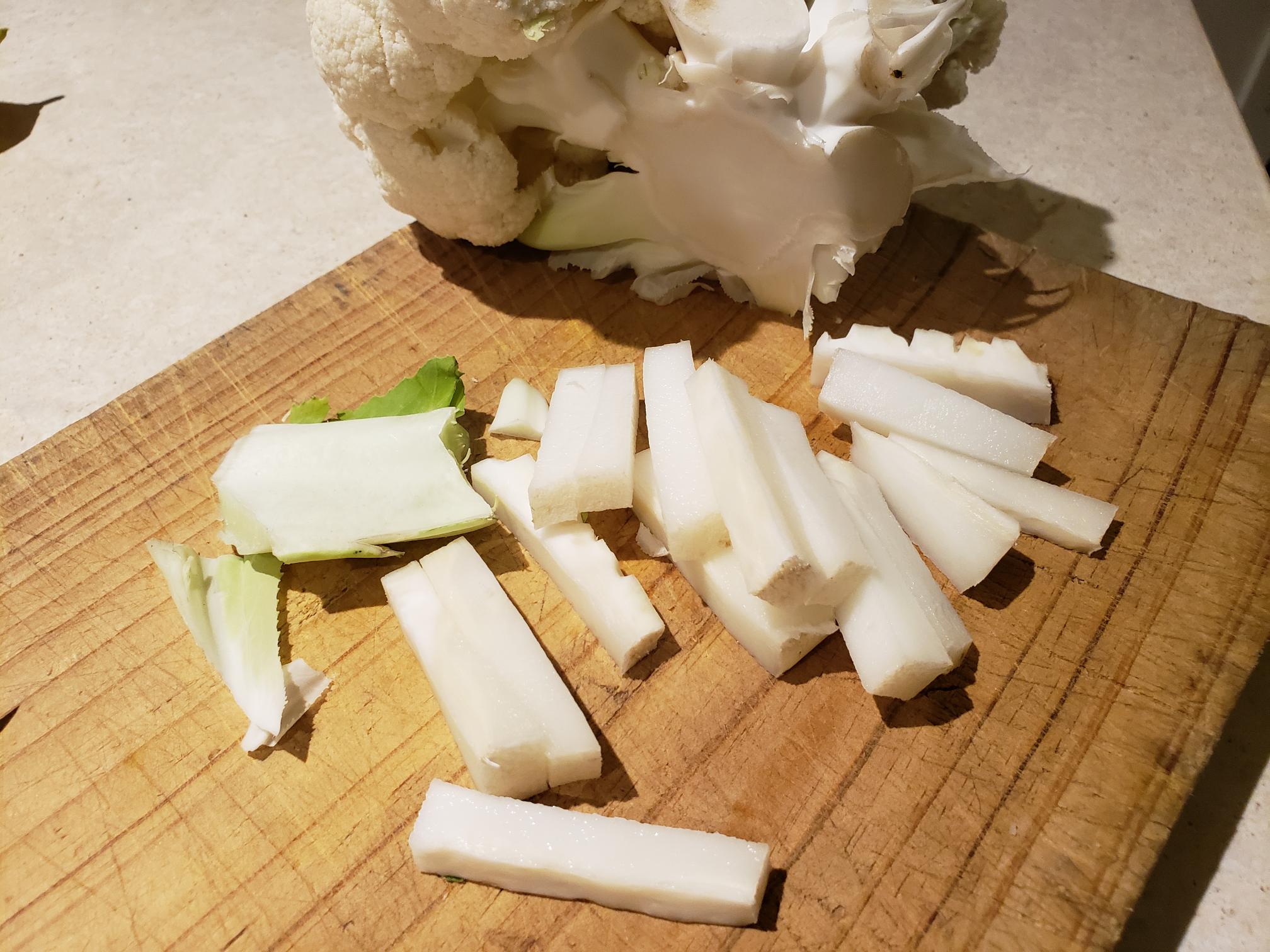
Crunchy cauliflower stalks and baby leaves, like other vegetal fibre, are worthwhile keeping in as part of wholefood diets, not discarding them.
If introduced to them early in life, most dogs will enjoy the crunch and beautiful flavours of snowpeas, green beans, capsicum, carrots, cauliflower, celery, broccoli and cabbage stalks, etc., as part of diet diversity and gut balance. Blackberries and strawberries have fibrous pips, in addition to their skins and vitamins. Some vegetables and fruits may be bought frozen, which is perhaps a cheaper and easier way to add them continuously to meals once they are defrosted.
As an example of this dietary approach, we have a young dog who is very sensitive to such high-starch carbs as rice, which quickly cause him to overheat and break out in an overall red rash, including his feet, undercarriage, and ears. He may soon start to smell “yeasty”, his skin can become itchy, dry and flaky, and his coat loses its shine.
What minimises these responses for him is a diverse diet of various Single Proteins (without chicken or chicken fillers) including fish, mixed whole vegies (no starchy ones), safe fruits, a little plain yoghurt and cheese, some virgin oils, and a couple of meaty bones every week. With this diet, we can now add a small daily amount of SPD kibbles with water. Consider that fresh vegies and fruits themselves contain considerable water, which is important to add with dry kibbles.
Quite a few kibbles and processed feeds have starch-related carbs as underlying fillers – including rice, faba beans, tapioca or even chickpeas, so it is not only “grains” – which is why we suggest kibbles are part of a diverse diet, not the whole diet.
A Note on Whole Oats: Whole oats are an exceptional grain carbohydrate and if possible are a wonderful addition to all diets in moderate to very small amounts, especially if sensitive dogs react to them. Oats do not contain gluten, a protein some bodies struggle to digest. Whole oats have easily digestible, soluble fibre, phosphorous and magnesium to help balance calcium and, like other grains, beneficial zinc, copper, selenium, etc.

Because he reacts to them, high-starch carbohydrates were largely removed from this young dog’s diet with positive, lasting results.
Diets that include “The Four Fibre S’s”
I acknowledge not all dogs will accept the above diet, especially when they are older because like anyone later in life they can be “set in their ways”. I acknowledge that bodies may be intolerant to certain foods from an early age and may not change. However, as mentioned in the first paragraph, it is worth trying this approach at any time but especially with young animals because they might learn to enjoy eating safe vegetal fibre through their life so that potential food intolerances and enduring illnesses may be less.
I kindly suggest to keep the Skins, Strings, Stalks, and Seeds from vegetables and fruits in our diets – when they are safe to do so. Please do not throw away the amazing goodness of “The Four Fibre S’s”! Our modern food preparation often cuts off, peels off and throws away key vegetal fibre roughage, which removes its essential wholefood properties. For example, if they are fresh and washed, we do not need to peel potatoes or carrots, remove the strings of peas and beans, take off the stalks of broccoli, cauliflower or silver beet, or leave out the seeds from capsicums. Consider that, when juicing fruits and vegetables, doing so often removes much of their highly beneficial prebiotic fibre, arguably so important for our immunity.

Various fruits and vegetables contain diverse vitamins and minerals as well as important vegetal fibre such as Stalks, Skins, Strings and Seeds (the Four Fibre S’s) that add their own beneficial nutrition to our diets.
What are Probiotics and Prebiotics, and how do they support gut balance?
Probiotics contain beneficial gut flora and by adding them to the diet we aim to build their living populations for gut balance. Yoghurts and cheeses contain simple, living probiotics. Because they are living entities, as mentioned above, we first seek to have the gut pH normalised for the beneficial flora to flourish, not perish. This is where Prebiotics May Assist Probiotics.
Prebiotics (and postbiotics) include non-soluble ingredients such as vegetal fibre that do not easily break down with water in the digestive system (as do sugars). Prebiotics support beneficial flora populations and, with them, their ability to ferment (break down) foods efficiently, especially the foods they love – fibre. The more we build and balance biome populations, the more fermentation may occur efficiently, and the more nutrition from all food is accessed properly, which supports the healthy production of our protective skin, coat and nail fortresses, etc., for longer-term immunity against disease.
Here we see the importance of gut pH normalisation and how prebiotics (and postbiotics) may complement probiotics for gut balance. Both are naturally available in the foods we choose, but they can also be supplemented.
Why is feed-grade charcoal an excellent Prebiotic-type of feed supplement?
Organic charcoal is traditionally known as an adsorbing “toxin binder”, where toxins “attach” to its stable surface and they are both excreted via manures, helping to prevent toxins entering and endangering the body.
Charcoal is an “indiscriminate” binder of toxins in the gut and hence some may worry that it binds vitamins and minerals, too, an action that is hypothesised (not proven) to negatively inhibit nutrition access for living animals.
However, after 10 years of seeing so many positive outcomes for animals (not negative), I believe there may be Multiple Modes of Action for charcoal in the gut than simply binding toxins and excreting them. Consider that the living gut relies on all molecules “binding” (joining together and falling apart), particularly with water and enzymes, to break down food. When molecules in the gut are not binding together effectively, the gut is in a state of dysfunction, particularly when water is not being used properly, for example, diarrhoea. Molecular binding in the Moving Gut is generally indiscriminate (regardless of charcoal) and I argue that, for effective digestion, we want more binding, not less. Molecular binding is good, not bad.
Consider that the charcoal includes stable, non-soluble carbon; that is, it does not dissolve or change with water. Its stable, adsorptive surfaces provide a vast number of “binding sites” that enable food, vitamins, minerals and the living biome (bacteria and fungi), etc., to interact successfully with one another, especially with water (saliva, enzymes), for effective digestion.
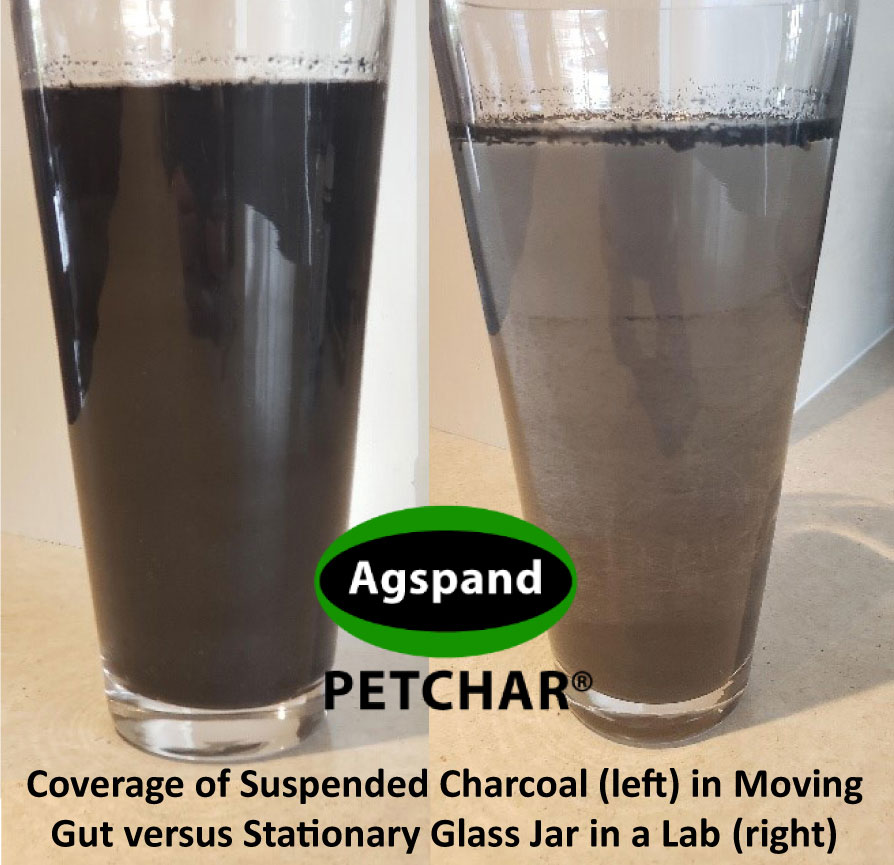
Using this method, we are following animals’ instincts in nature. Many animals especially wild animals seek and use natural mineral clays and organic charcoal found in the environment to help them overcome naturally occurring feed-potencies and toxins. Accessing feed-grade charcoal is important when seasonal weather affects the quality of animal feeds; for example, mould from moisture or humidity, or high levels of non-structural sugars or nitrates in pastures, etc.
The logic of emerging research also supports the idea of feed-grade charcoal’s broader gut support. Leading Australian animal nutritionist Emeritus Professor Ron Leng from the University of New England made this observation in his research published by the CSIRO in 2017. He suggests that non-soluble “chemically insert” particles in the gut that do not change with water, such as organic charcoal, support beneficial living biome and, when they are in sufficient populations and effectively fermenting/breaking down gut materials, they may also overcome and “degrade” toxins, meaning the toxins are dealt with in the gut and are not only excreted. This approach keeps the sensitive Good Guys actively present in the gut rather than them being overcome by the powerful Bad Guys (including pathogens) that in excess may negatively impact animal digestion.
This process makes sense because organic charcoal is often made from highly fibrous, woody material and hence it may be used by the beneficial gut biome as their “Ultra Fibre” support. This is why I feel confident to describe feed-grade charcoal as an Ultra Fibre Prebiotic supplement in the diet. Its work starts in the mouth mixing with saliva but it also persists within as well as after the stomach to support fermentation and pH normalisation in the small and large intestines, so it may also be called a Postbiotic.
Importantly, the charcoal represents non-soluble plant fibre that is not related to the starch of whole grains and grain fibre.
The EU Journal lists Vegetal Charcoal as an accepted animal supplement. It is important that charcoal supplied to animals is first tested to be feed-grade safe. There are different charcoals based on different feedstocks used to make them, so they have different characteristics. Due to its vast surface area, only very small amounts of feed-grade prebiotic charcoal are needed regularly to support long-term gut balance. Charcoal contains stable carbon but usually few other nutrients, which is why it is best supplemented with a variety of other things that do; for example, all feeds, probiotics and supplements as per animal type and stage.
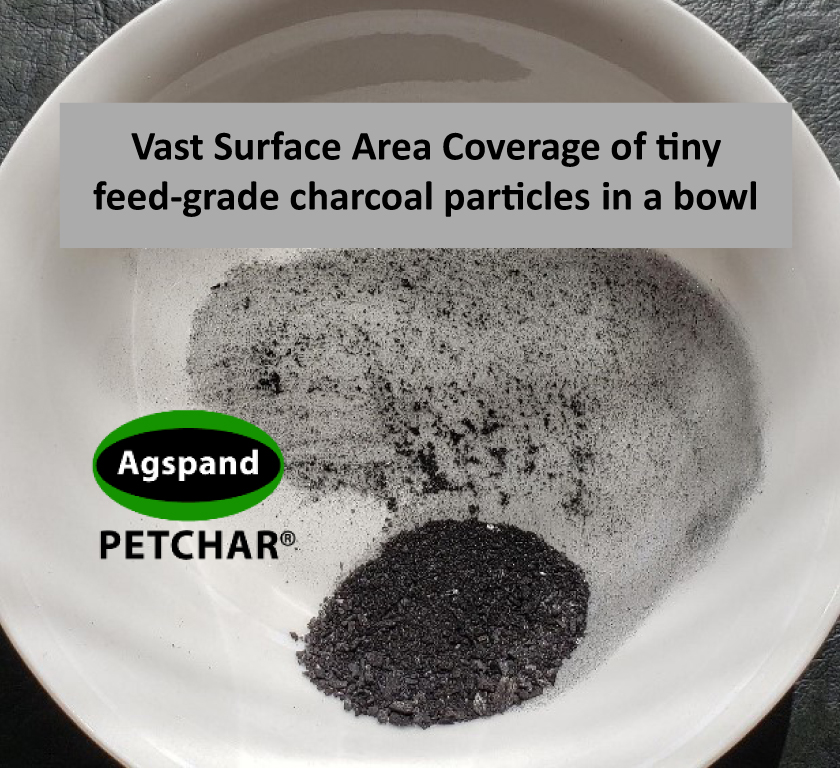
Feed-grade charcoal does not need to be activated to be supplemented. Activated charcoal is shown to be 5 to 12 times more adsorptive than the more moderate non-activated charcoal because its surface area is deliberately expanded (activated) via additional manufacturing processes.
Using vegetal fibre as organic wholefood in diets
Overall, we hope the above suggestions may encourage trying an early diet with dogs that, along with diverse proteins, regularly includes safe, wholefood vegetal fibre as well as a topper of feed-grade, prebiotic charcoal that has no taste or smell to deter fussy eaters.
Dogs (or any animal) who have encountered stress (maybe from change, a traumatic event or recovering from illness or surgery), or if they are struggling with dietary sensitivities or poor condition, it is worthwhile trying a tiny amount of daily organic charcoal as a meal topper for a few months, along with fresh vegetal fibre to help build and maintain gut normalisation. Do this while minimising high-starch carbohydrates like bread, pasta, rice or excess starch fillers because too much could create excess gut acidity while being digested.
Starches are best minimised for dogs because our aim is to reduce inflammatory responses to gut irritants and overheating. Any digestive system should not be continuously overly acidic as this risks long-term illness due to weakening immune fortresses that rely on gut normalisation for balanced nutrition access. The idea of normalising gut pH using food types is not new; what is included here, is the value of vegetal fibre and prebiotic feed-grade charcoal, towards achieving this aim.
We have seen dogs regain their waistlines, cool skin and glossy coats, happily running around like young dogs, using this dietary approach. Ideally stools should be firm and have a moderate not overly strong odour.
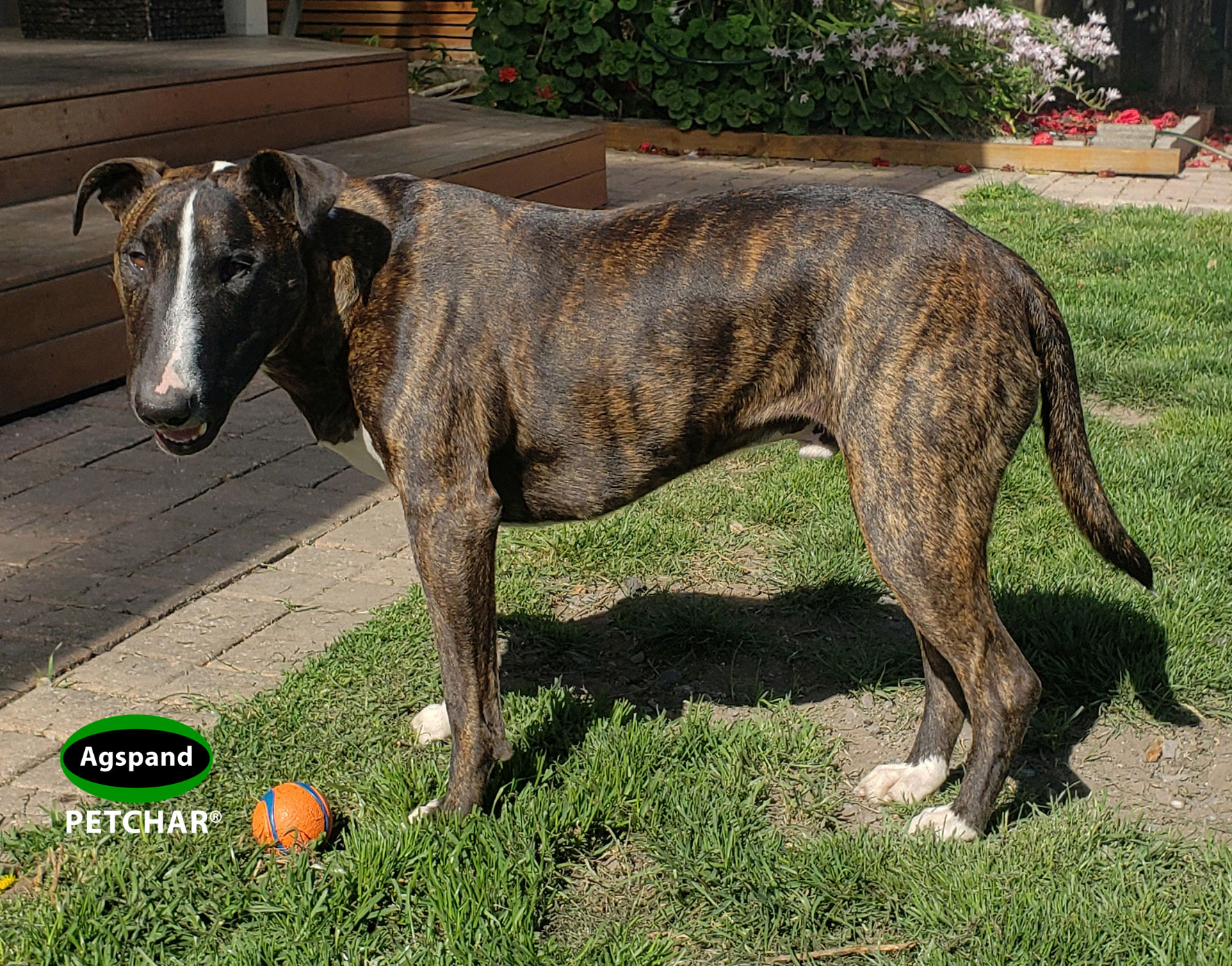
A beautiful young dog looking and feeling great on a diet with varied proteins, added vegetal fibre along with a mineral–charcoal meal topper, and minimal high-starch carbohydrates.
In summary, we want everyone to look, smell, and feel Fantastic, including our dogs!
These ideas are only kind suggestions, not prescriptive advice.
If symptoms persist for your dog, please contact your veterinary practice.
Feed-Grade Charcoal for Dogs and Pets in Australia
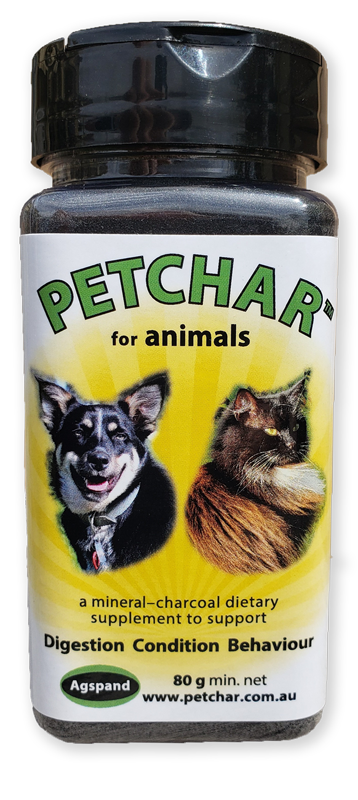
TRY PETCHAR®, a certified feed-grade mineral–charcoal meal topper for dogs and pets, available in Australia via www.petchar.com.au.
PETCHAR® combines a range of electrolyte minerals in small amounts with the charcoal, as they work well together to support gut balance and nutrition access. PETCHAR® prebiotic may be added with all foods, probiotics, and extra vitamins and minerals as may be needed for individual animals. A minimum of 2 months supplementation is recommended.
For detailed User Information, please visit the PETCHAR® website, above.

Example of dog’s diverse dinner with a light sprinkle of feed-grade mineral–charcoal prebiotic PETCHAR® meal topper.
About the Author
Karen Enkelaar is co-director and consultant of Agspand healthy profitable agriculture. She has a Certificate of Animal Feed and Nutrition.
Since 2016 Agspand has made and supplied its feed-grade minerals-plus-charcoal supplements FEEDCHAR® for Farms, and PETCHAR® for Pets in Australia. She has 10 years’ field experience supporting animal carers around the country with these products, including breeders, rescuers and retrainers. She has served as an Executive Board Member of the Australian New Zealand Biochar Industry Group (ANZBIG), an expert group who is helping to build a transparent and safe charcoal-biochar industry with researchers and regulators to scale up healthy, circular-economy regenerative agriculture in Australia.
Healthy animals, soils, and pastures are complementary. Using stable charcoal on agricultural properties has 3-for-1 benefits that help to reduce expensive inputs: animal health is economically maintained using charcoal supplementation but, once it hits the ground via their manures, its support continues for healthy soils and pastures. The charcoal builds stable carbon in soils to retain nutrients and water for organic matter to live and thrive (as it does in the gut), it helps to reduce soil emissions, and its moderate alkalinity acts as a soil pH buffer to grow healthy, diverse pasture.
The above essay is written by the author and represents her ideas. Please reference her when using this information. Contact Agspand for permission to use any images.
Anyone is welcome to contact Agspand with any questions on FEEDCHAR® and PETCHAR®.
© Karen Enkelaar (2026). Agspand healthy profitable agriculture. www.petchar.com.au | www.agspand.com.au